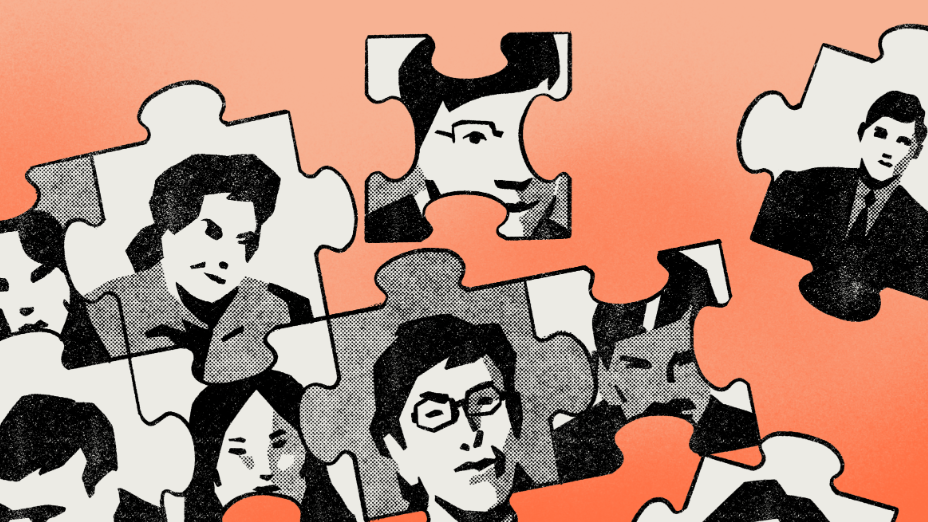
What happens when millions of documents, photographs, court records, letters, audio recordings, and testimonies—which are currently scattered—can be analyzed and linked using artificial intelligence?That is one of the questions addressed by the interdisciplinary project in which Hugo Rojas, a sociologist of law, specialist in transitional justice, research scholar at the Alberto Hurtado University School of Law, and an associate professor at the Catholic University of Uruguay.
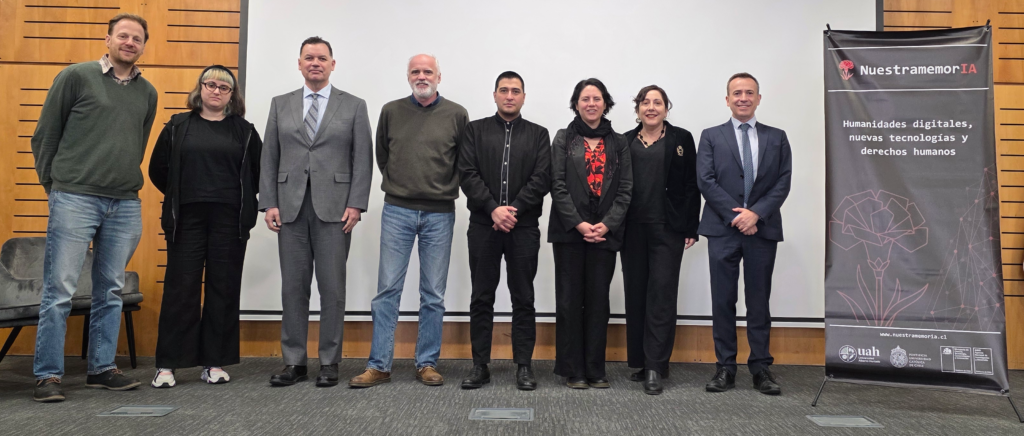
The initiative is being carried out by a team that also includes the following academics from the Department of Computer Science at the Pontifical Catholic University of Chile: Domingo Mery, Jocelyn Dunstan, and Juan Reutter; Professor Stephan Ruderer from the Institute of History at the Pontifical Catholic University of Chile; and postdoctoral, doctoral, and master’s-level researchers. Knowledge drawnfrom the social sciences and humanities (HACS), archival science, and engineeringhas enabled them to work collaboratively to develop NuestramemorIA, a project capable of processing large volumes of information.
The goal, Rojas explains, is not to replace those who manually analyze human rights violations committed during the dictatorship, but to provide them with new tools to find connections, identify gaps, and guide their investigations.
—How did this project come about, and what problem were you trying to address?
The project began three years ago, on the occasion of the 50th anniversary of the coup. At that time, I was interviewed on a podcast to discuss the archives and transitional justice in the country. During that interview, I raised several questions: Who is responsible for the archives? Why don’t we have a comprehensive archive documenting the repression? How do we preserve these documents? Who has access to them?
Domingo . Mery heard that interview. We got together to talk, and I shared my concerns with him about the world of human rights archives. He began to explain to me how new technologies could help us answer some of those questions.
In August 2023, we agreed to work together, and computer science researchers quickly joined the team. The first step was for me to help them understand the world of human rights archives, and for them, in turn, to introduce us to the world of artificial intelligence.
—What can artificial intelligence do with these files that used to be very difficult to do?
There is a vast amount of documentation related to human rights violations, and it is scattered among various institutions, organizations, communities, and families. Traditional investigative work takes years.
The new tools allow us to speed up searches and, in particular, to connect information that we often overlook when analyzing documents in isolation.
—We can work with court records, government agency decisions, letters, diaries, audio recordings, documentaries, and photographs. We transformthese materials into information that can be processed and linked. This allows us to establish relationships between documents and ask questions that help us uncover information.
—How does artificial intelligence reconstruct this network?
It helps us organize the existing information, put it into perspective, and identify what's missing: which pieces we don't have yet and what information we need to seek out.
Artificial intelligence can help us construct a story and identify places, people, and events, but then comes a fundamental methodological component: human validation.
—Why is that validation so important?
The future is at stake.We cannot entrust artificial intelligence with the task of deciding what is true. We must rely on our evidence. Tomorrow, someone might tell a story differently—without having witnessed it—or might even obtain it through artificial intelligence, without us knowing how reliable it is.
That is why one of the featureswe have developed is that, when artificial intelligence generates a report, it also provides citations and references to the documents it used.
—The project brings together engineering, the social sciences, the humanities, history, and archival science. What does this experience reveal about interdisciplinary research?
It shows that the disciplines need each other.
The engineers who work with us realized that they needed the social sciences and the humanities to move forward. And we also realized that we had problems with the archives that we couldn't solve on our own.
This project illustrates the importance of building bridges between different fields of knowledge.This works when there is a scientific ecosystem that fosters interdisciplinary dialogue.
And, furthermore, we need artificial intelligence as an essential partner to help us move forward.
—Speaking of that, what risks are involved when certain areas of knowledge are prioritized over others?
It is a big mistake to neglect some disciplines in favor of others. Development is linked to progress in all areas of knowledge and to the interaction among them. No single discipline is capable of solving complex problems on its own.
That is why I believe that decisions of this kind should be the result of participatory and deliberative processes within the scientific communities, and not merely administrative decisions made in response to unforeseen circumstances.
—Finally, what lesson do you think should be passed on to future generations?
What matters most is learning about a culture of human rights so that human rights violations will “Never Again” occur—not only in our country, but throughout the region. We have just been awarded an international grant that will allow us to expand NuestramemorIA and develop “Memorias del Sur”, a project involving researchers from Uruguay, Argentina, and Chile to examine human rights archives from the dictatorships of the Southern Cone.
To that end, we need to preserve our collective memory and strengthen the institutions that protect these rights. Technology alone is not enough: we need documentation, research, scientific communities, and a culture that values the rule of law, democracy, and human rights.
Artificial intelligence can help us reconstruct the past, find connections, and ask new questions. But the responsibility for understanding our history and deciding what to do with that knowledge remains ours.
Interview conducted by the Office of the Vice President for Research at Alberto Hurtado University: https://investigacion.uahurtado.cl/sin-categoria/hugo-rojas-nuestramemoria-une-las-hacs-con-la-ingenieria-para-fortalecer-las-instituciones-que-protegen-los-derechos-humanos/