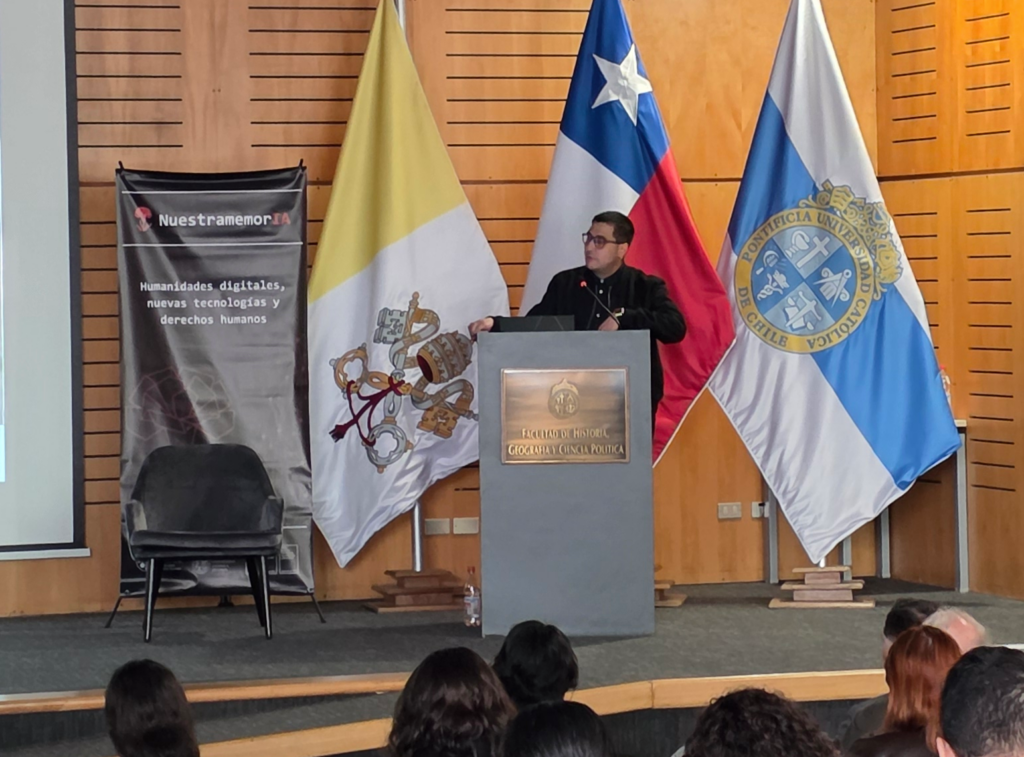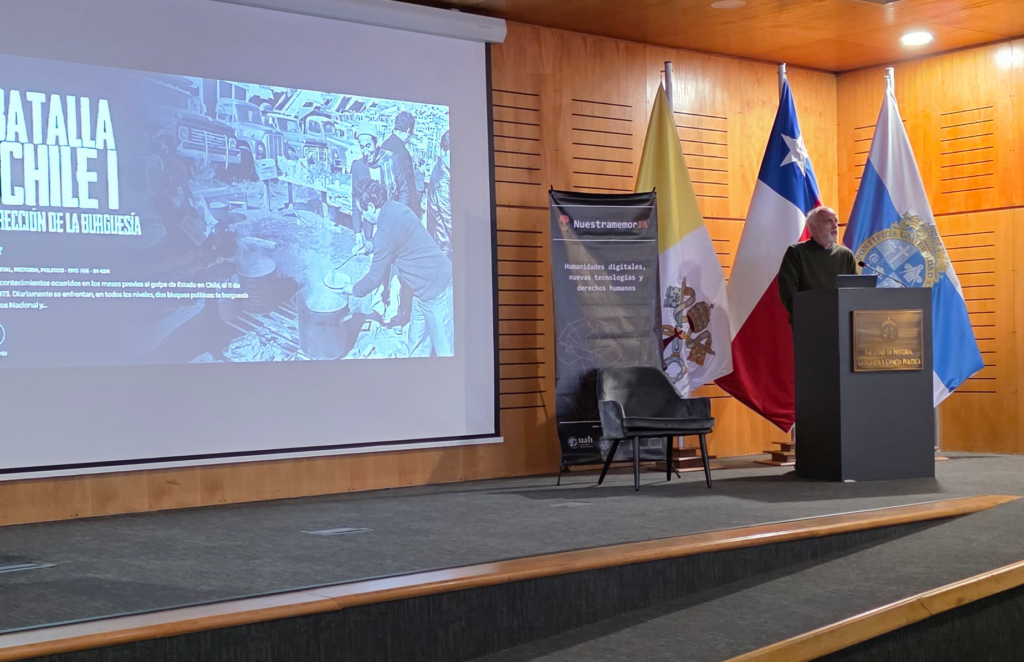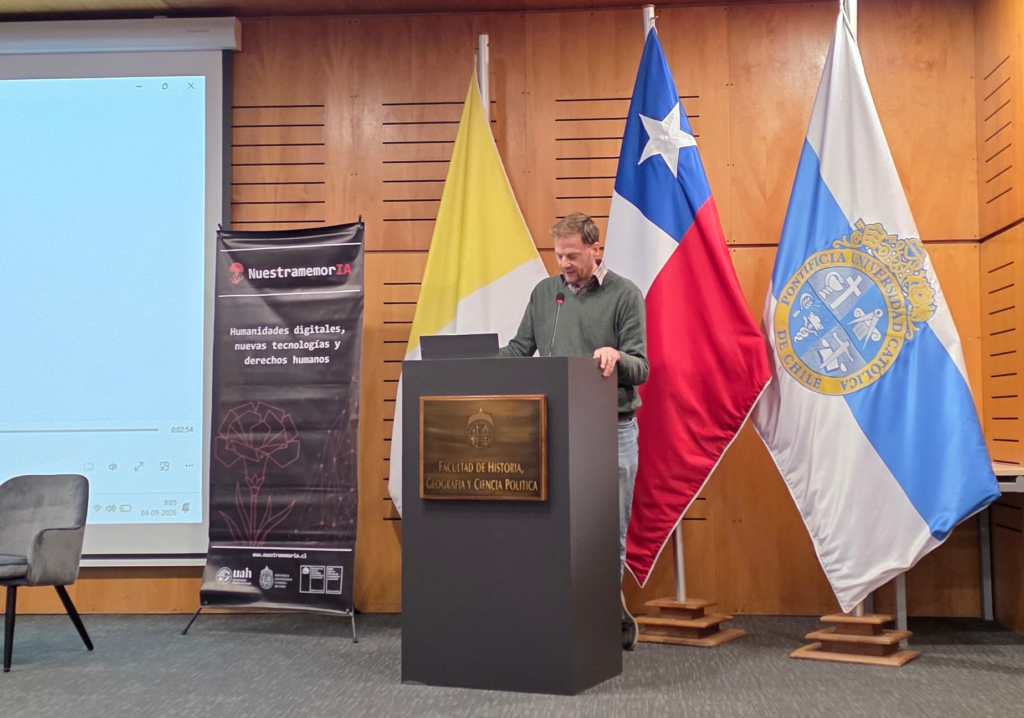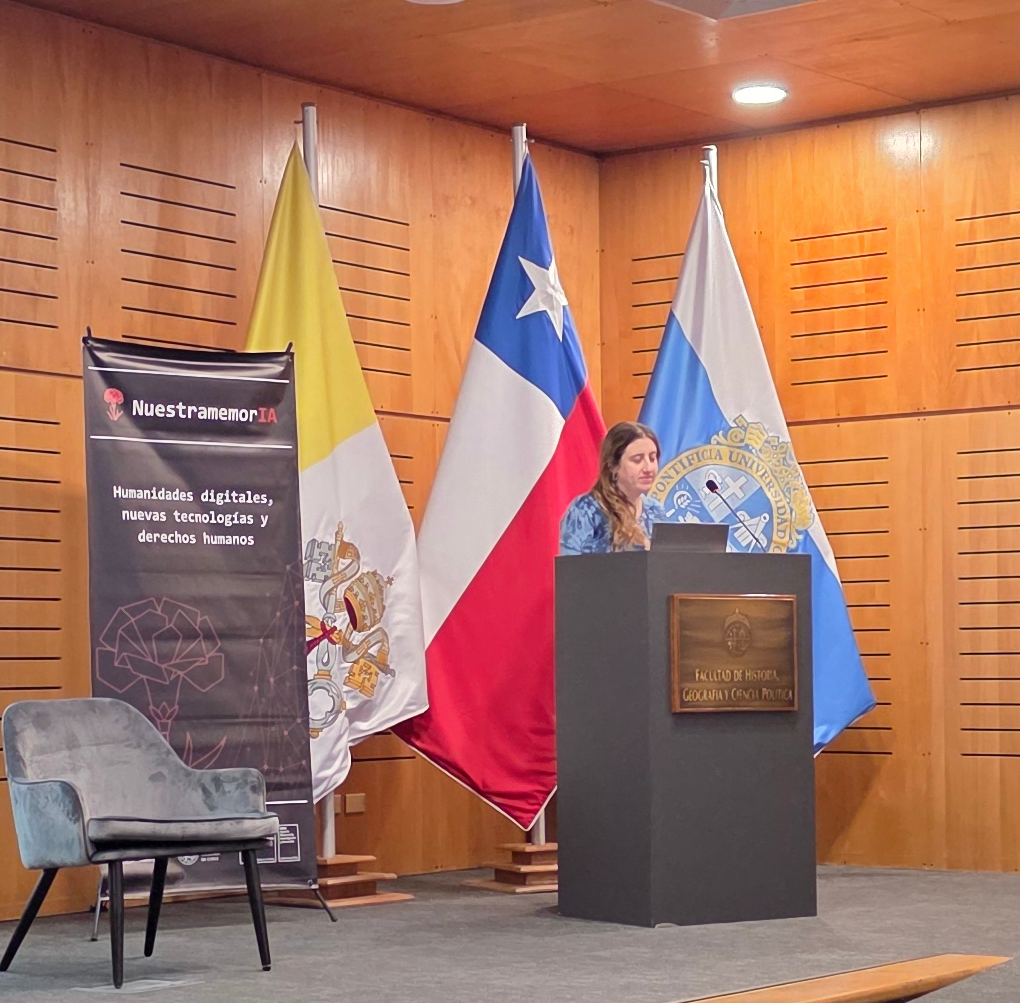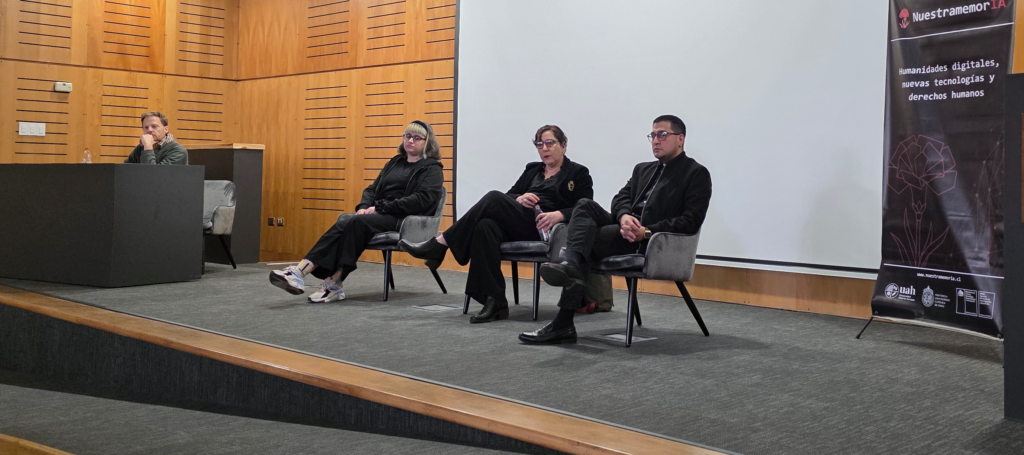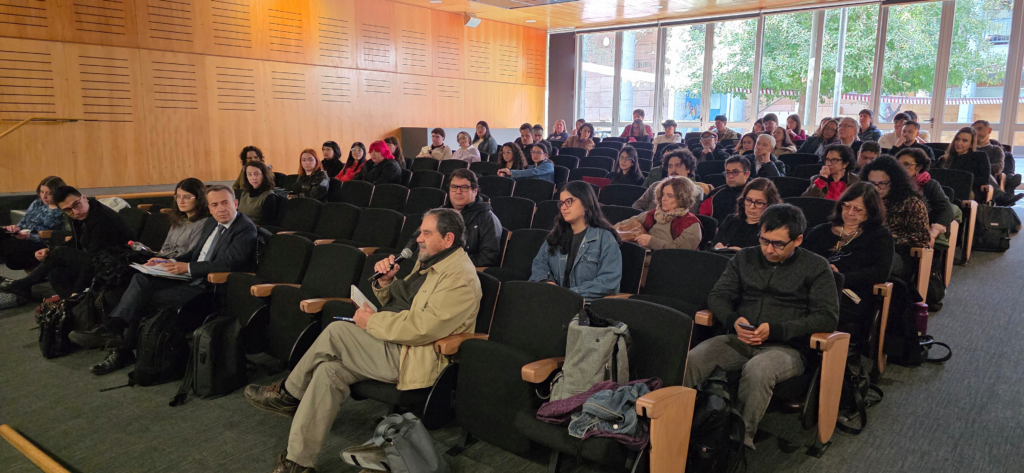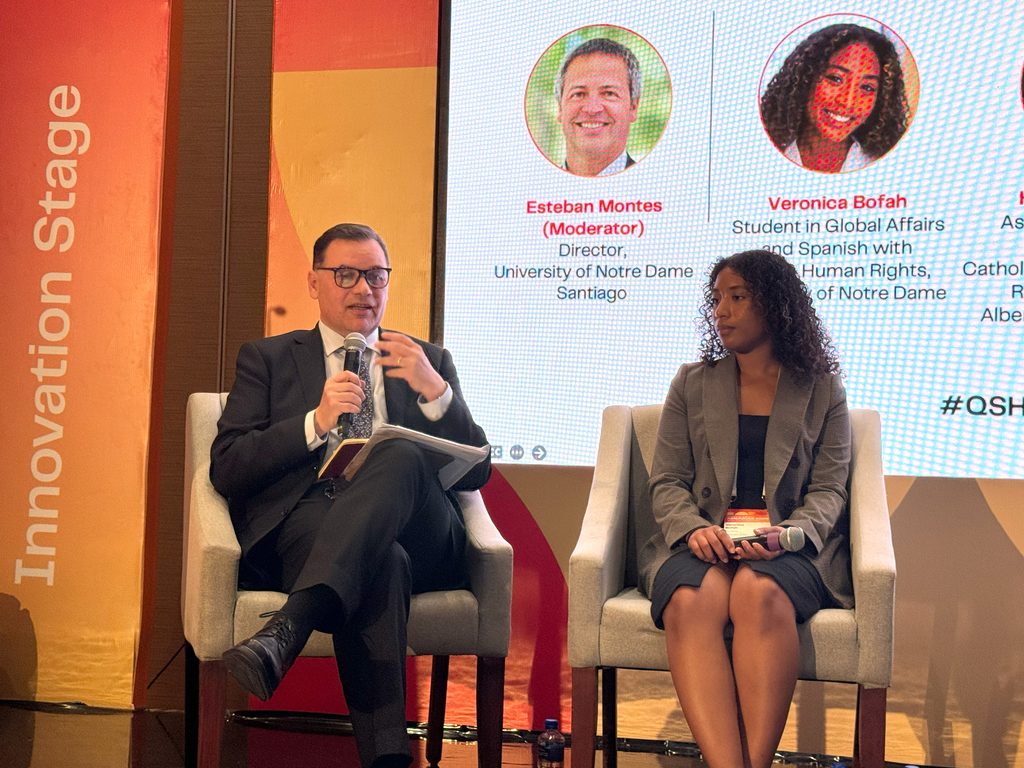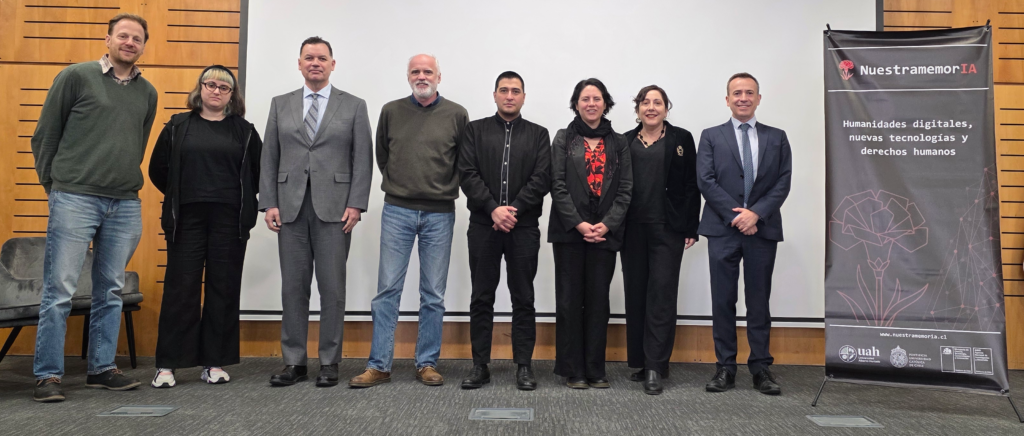
Technology as a tool for the pursuit of justice and historical memory: this was the theme of the presentations given by various experts at the international seminar “Sites of Memory, Archives, and Digital Humanities,” held in the Auditorium of the School of History, Geography, and Political Science at the Pontifical Catholic University of Chile (PUC) and organized by NuestramemorIA.
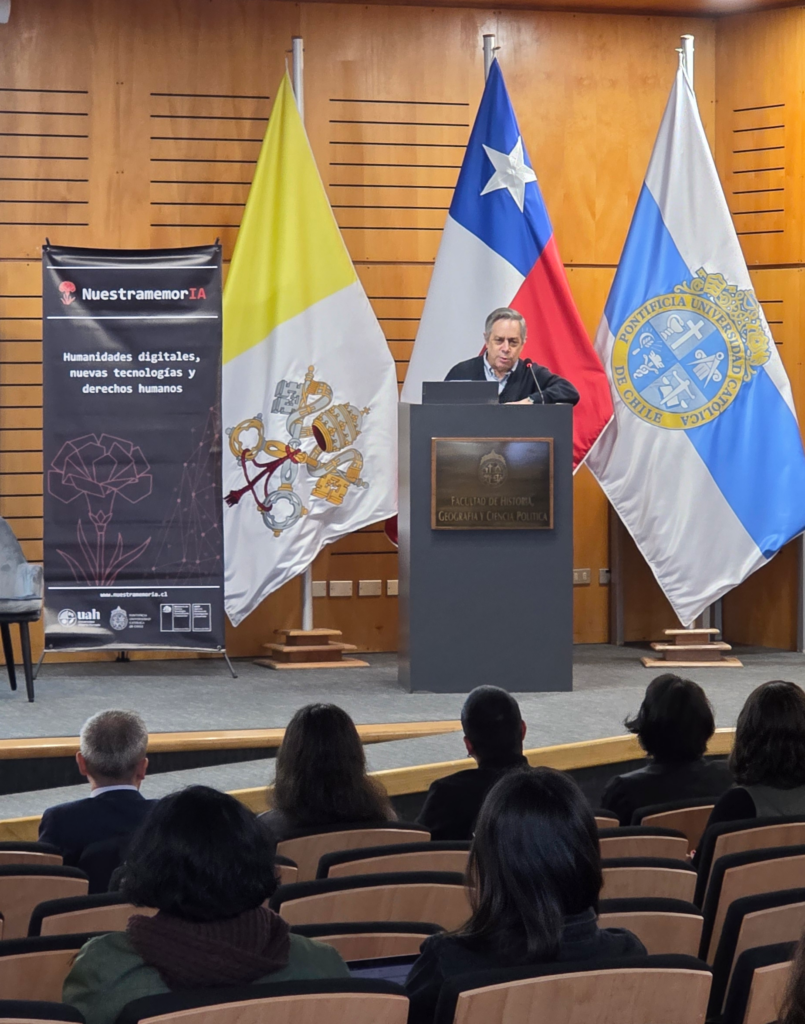
The event brought together nearly 80 participants, who were welcomed by Valeria Herskovic, Director of the PUC Department of Computer Science, who emphasized the ethical rigor required when using various technologies, and Claudio Rolle, Director of the PUC Institute of History, who highlighted the humanistic value of placing human dignity at the center of research, and kicked off the activities with the song “Cuando amanece el día” by Ángel Parra.
Archives from the Dictatorship in the Age of AI
One of the most important aspects for the research group NuestramemorIA is the trust built with the organizations that hold the archives that form the core of their studies. That is why Stephan Ruderer, from the Institute of History and a researcher at NuestramemorIA, expressed his gratitude to the representatives of the various institutions that have made the archives available, thereby enabling this research to be conducted.
Domingo Mery, a faculty member in the Department of Computer Science (DCC) at PUC, presented the work carried out as part of the project NuestramemorIA on the development of facial recognition algorithms and similarity indices. The researcher explained that the logic behind the computer vision methods being used sounds quite simple: “First, you have to detect where people’s faces are, and then, based on those faces, cross-reference the facial information in the photo with the 3,000 photos we have in our database to see where there are reasonably high similarity indices.” The results have been very successful for individuals with a large number of images in the database—namely, well-known figures from that era, such as Victor Jara and Salvador Allende.
Placing people—and their perspectives and knowledge—at the center of the work is one of the key focuses of Jocelyn Dunstan, a faculty member at the Institute of Mathematical and Computational Engineering (IMC) and DCC PUC, as well as a researcher at NuestramemorIA and Memorias del Sur. “We could propose solutions, methods, and systems, but without experts in history, the social sciences, and law, we wouldn’t be able to succeed; if they aren’t validated, they’re useless,” she noted. The complementary nature of artificial intelligence and human validation is indispensable for the study of human rights archives.
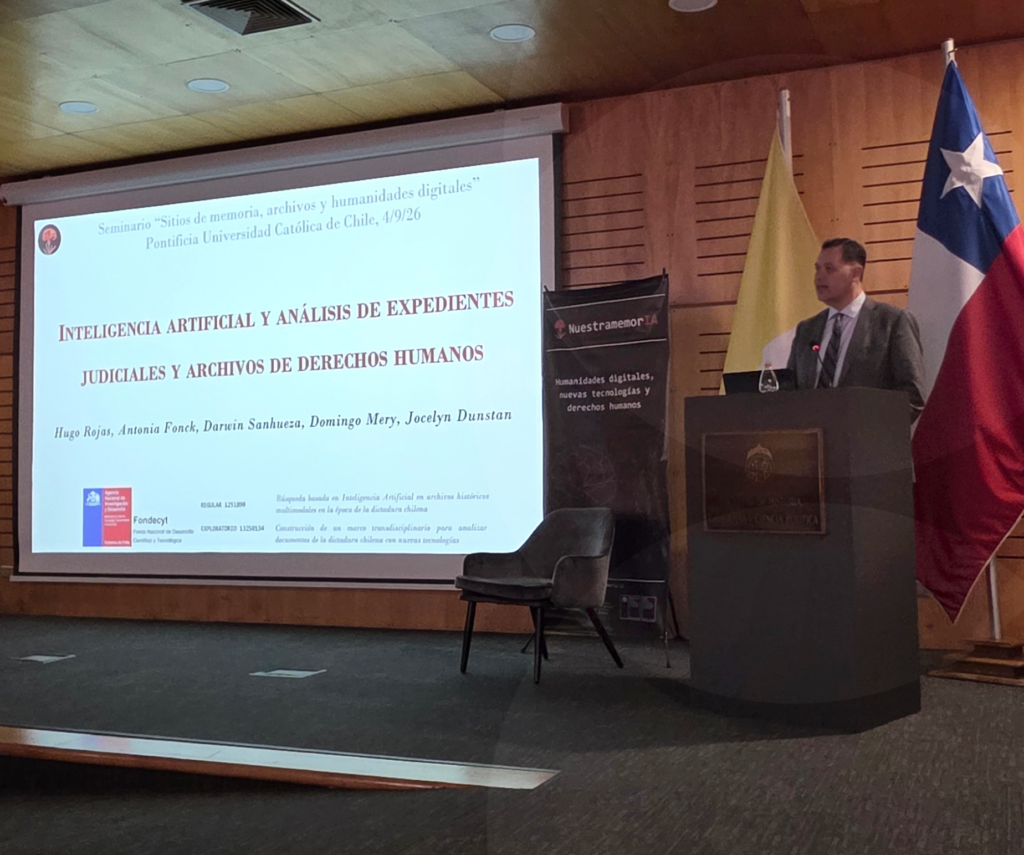
“Automated analysis of court records in human rights violation cases makes it possible to organize and process thousands of pages on a massive scale, facilitating the identification of procedural patterns, key testimonies, and networks of action that contribute to the processes of truth and justice and to the work of the courts,” noted Hugo Rojas, a professor at the Alberto Hurtado University ( UAH) School of Law and the Catholic University of Uruguay (UCU), and a researcher with NuestramemorIA, Memorias del Sur, and VioDemos.
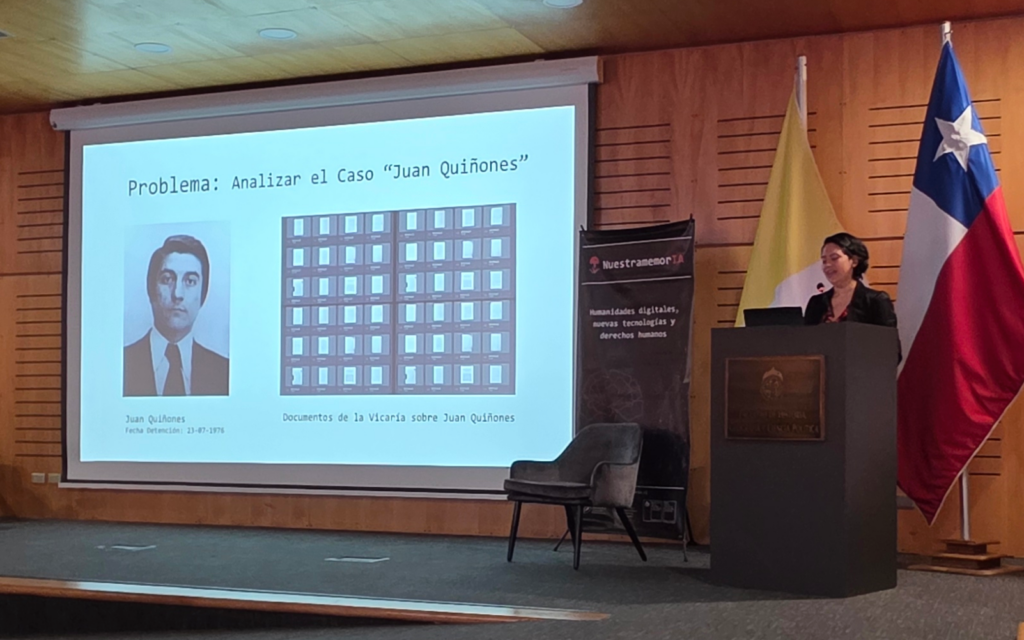
In the second session, the presentations began with Pablo Seguel, a postdoctoral researcher at UAH affiliated with NuestramemorIA and Memorias del Sur, who is applying data analysis and AI methodologies to reconstruct patterns of repression and institutional practices in complex cases of human rights violations, thereby optimizing the search for critical information in large-scale documentary collections. “The integration of artificial intelligence into documentary analysis and historical research opens up an unprecedented opportunity for us to tackle massive and complex documentary collections related to human rights violations, saving time and allowing us to connect evidence that was previously impossible to process manually,” notes the historian, author of the book *Soldados de la Represión*.
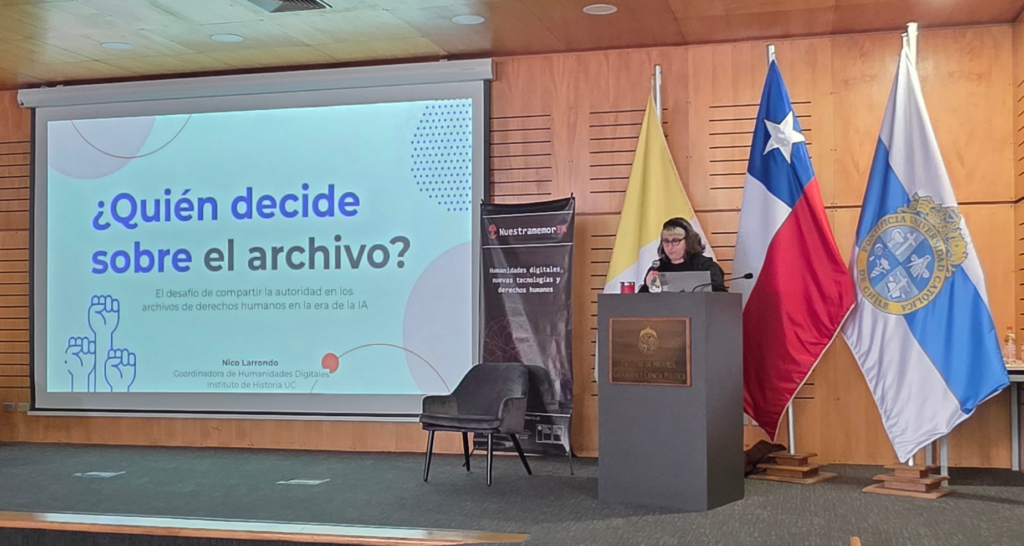
Speaking from the PUC Digital History Laboratory, Nicole Larrondo emphasized that “the real challenge in the age of artificial intelligence is a shared one: it involves asking ourselves who makes decisions about the archive, maintaining human control and oversight at all times (‘human in the loop’), and preventing algorithms from replacing ethical and social curation and the collective memory of communities.”
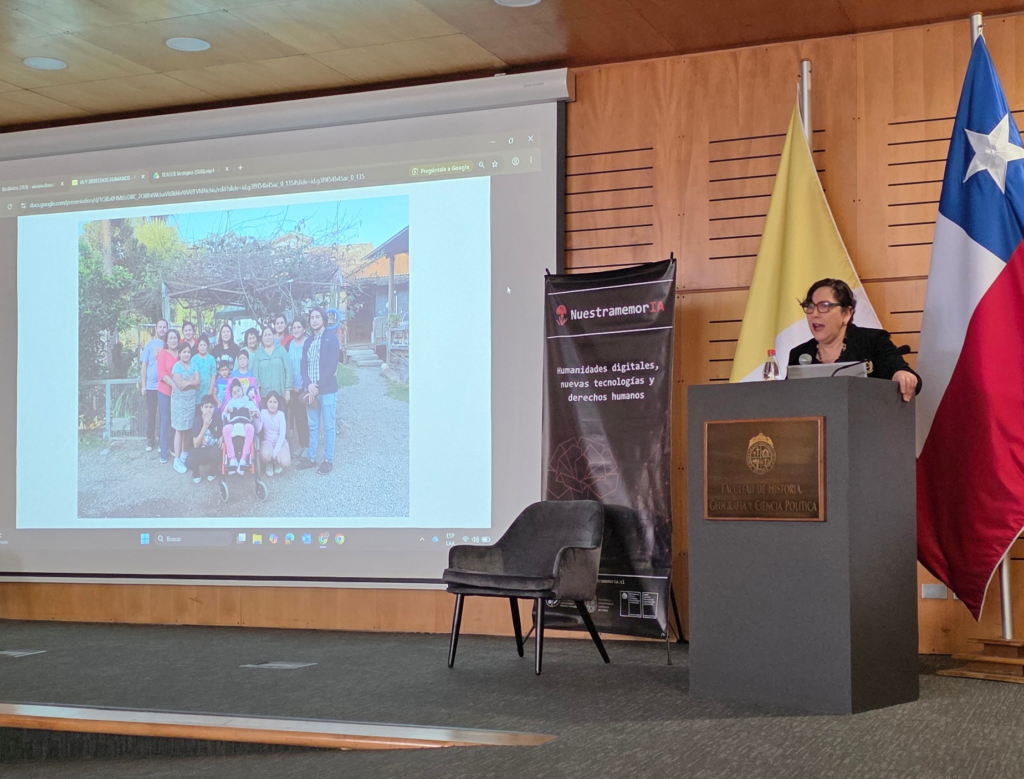
The transmedia project “Vestigios: Minors Who Were Victims of Enforced Disappearance” was presented by Viviana Flores, director of the UDP Digital Lab. The project addresses the historical memory of children and adolescents who were victims of enforced disappearance during the military dictatorship in Chile:“It combines the digitization and processing of primary sources (files, photographs, and testimonies) to address one of the most sensitive and least visible aspects of repression in Chile, creating a space for symbolic reparation and social awareness.”
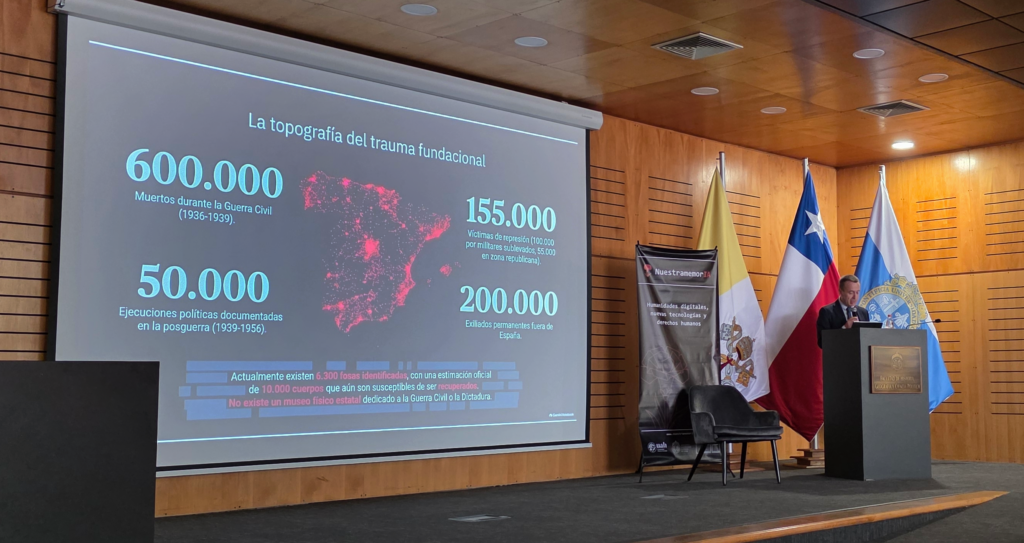
Finally, Carlos Sanz, Director of the Department of History at the Complutense University of Madrid, delivered the keynote address titled “Artificial Intelligence, Archives, and Historical Truth: Spanish and European Experiences.” He emphasized the objective of his work, which is to analyze the lessons and best practices regarding the use of AI in European archives, demonstrating how the technology makes it possible to connect and make massive documentary collections searchable, while always keeping the responsibility for historical interpretation in human hands.
Regarding the work of NuestamemorIA, she noted, “I would highlight ideas that I believe align closely with the conclusions of this seminar: the question is not what we do with the digital humanities or AI, but rather what historical, archival, and human rights issues we want to address. AI expands our ability to interpret the past, but the responsibility for doing so remains ours. It is a center of excellence and a fundamental initiative for transforming archives into tools for truth, justice, and reparations.”
One of the most discussed aspects of Sanz’s presentation was the mapping of memory carried out in Spain through the “map of mass graves, ” “a public, digital tool that allows for the georeferencing, systematization, and public dissemination of information on the burial sites of victims of the Franco regime, demonstrating how technology and open data can serve as a public service for historical research and reparations.”
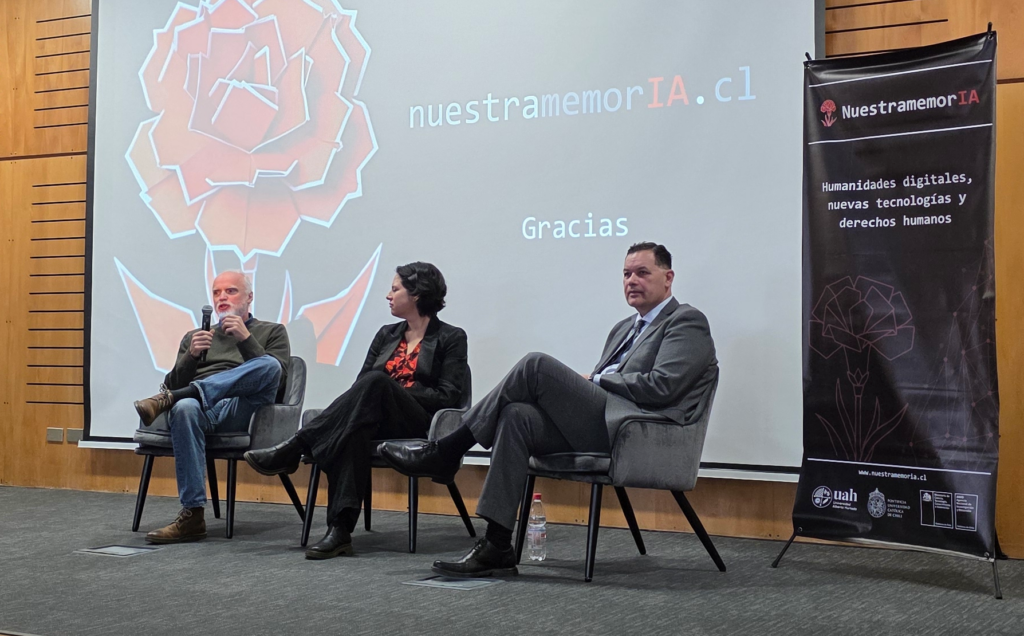
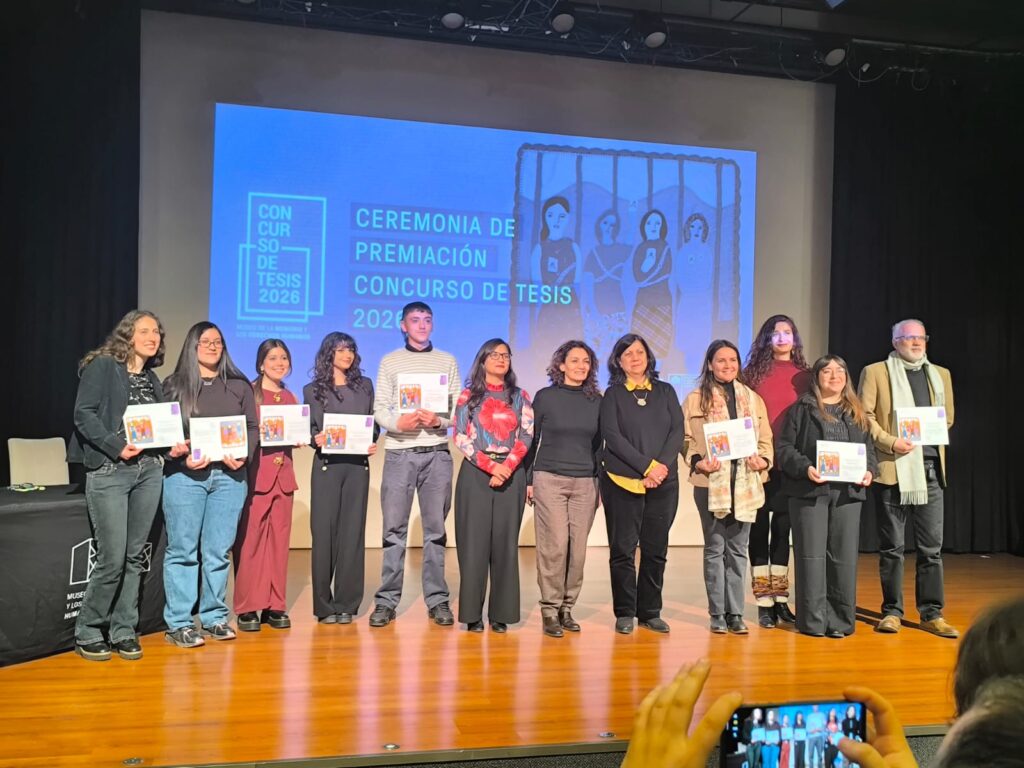
The meeting concluded by reaffirming the commitment to collaborative work among universities, memory groups, research centers, and institutions such as the INDH, Londres 38, the Museum of Memory, Villa Grimaldi, the Vicaría de la Solidaridad, and the UC Memory and Human Rights Collective.
Watch the video at: https://www.youtube.com/watch?v=MyFicjANwvk