To create a digital infrastructure that serves as a repository for archives produced during the 20th-century dictatorships in the Southern Cone of South America: this is the goal of the project “Memorias del Sur: Interdisciplinary Research Platform on Archives of the Recent Past in Uruguay and the Southern Cone,” which was selected as one of the projects of academic excellence to receive funding from the Ida Holz Fund of the National Agency for Research and Innovation of Uruguay (ANII)
The project aims to provide tools that will enhance the search for missing persons by systematically cross-referencing information that is currently scattered, and to contribute robust evidence for transitional justice processes. “Memorias del Sur” also aims to support the preservation of collective memory and the work of memorial sites through diligent collaboration and the implementation of cutting-edge technological tools.
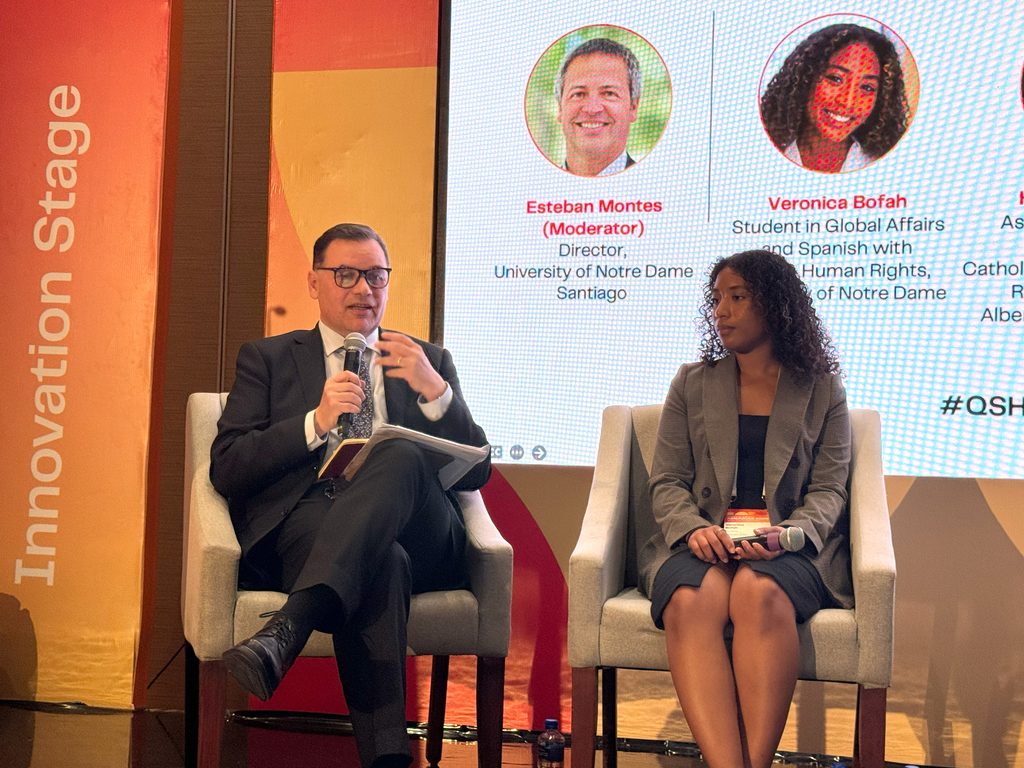
“This is undoubtedly a significant step forward for historical research and transitional justice in the region, as the project consolidates the research that NuestramemorIA has been conducting in Chile alongside similar teams in Uruguay and Argentina,” notes one of the project’s coordinators, Hugo Rojas, a professor at the Catholic University of Uruguay and Alberto Hurtado University, and a researcher with NuestramemorIA and Viodemos.
Interdisciplinarity and Social Impact with Security and Privacy
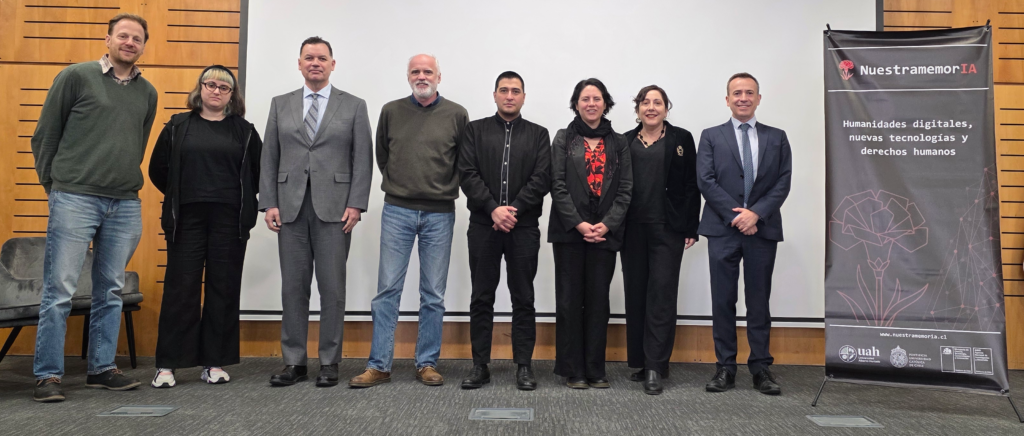
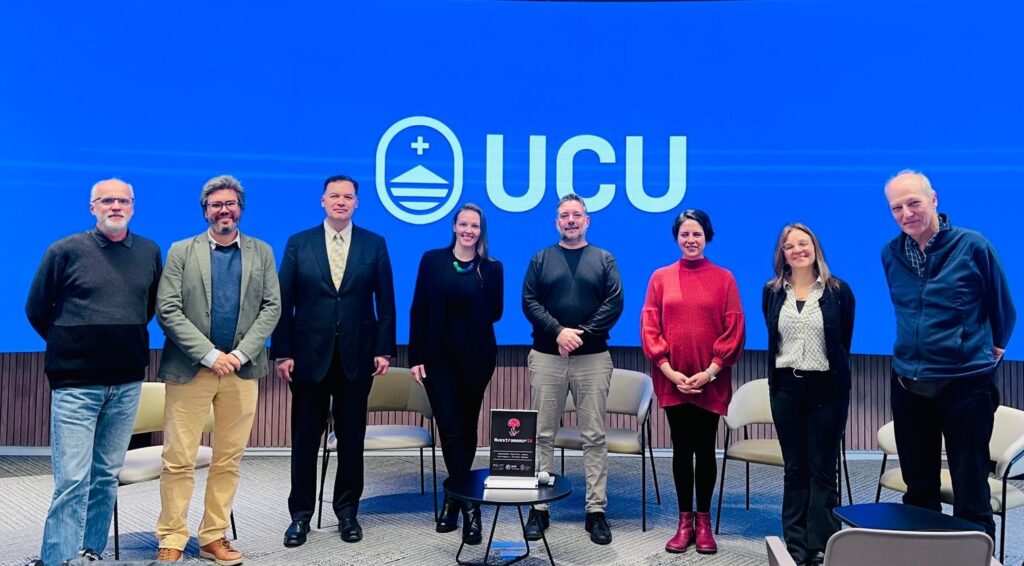
“Memorias del Sur” is a distinctly interdisciplinary and transnational initiative that brings together expertise from the University of the Republic (Udelar) through its schools of Engineering, Humanities, Social Sciences, and Information and Communication, in addition to collaboration with Alberto Hurtado University, the Catholic University of Uruguay, and the Pontifical Catholic University of Chile.
Led by researchers Gregory Randall of the School of Engineering and Aldo Marchesi of the School of Humanities and Education Sciences, both at Udelar; the project team also includes NuestramemorIA, Jocelyn Dunstan (IMC and DCC, UC), Hugo Rojas (UCU–UAH), Domingo Mery (DCC, UC), and Pablo Seguel (UAH), among other Argentine and Uruguayan scholars.
In addition, “Memorias del Sur” has an international network of partners in Chile, Argentina, and Uruguay, which have placed their trust in the security and privacy—as well as the high ethical standards— offered by the interdisciplinary research teams working on projects that utilize highly sensitive archives from the era of the dictatorships. The project will be carried out in collaboration with the Museum of Memory and Human Rights and the Documentation and Archives Foundation of the Vicaría de la Solidaridad in Chile, as well as other organizations in the Southern Cone.
A digital infrastructure with technological sovereignty
The project consists of the design and implementation of an integrated digital infrastructure that will serve as a regional repository for documentary collections produced by repressive agencies during the dictatorships of the 20th century.
“What sets this platform apart is its use of tools such as Natural Language Processing (NLP), knowledge graphs, and query systems based on GraphRAG architectures, but without a doubt, a strategic pillar of the proposal is technological sovereignty: all algorithms and inference engines will be developed and processed locally, ensuring the confidentiality and security of extremely sensitive data regarding human rights violations, ”notes Jocelyn Dunstan, director of Nuestramemoria and a faculty member at IMC and DCC UC.
The platform will be hosted on the Luisa Cuesta Repository, a well-established Udelar resource, which ensures its long-term sustainability and open public access under strict ethical and data protection protocols.
This regional effort builds on the research that the transdisciplinary platform NuestramemorIA has been conducting in Chile, where it already uses artificial intelligence with high standards of privacy and security to link archives from the Chilean dictatorship. In its earlier development phases, NuestramemorIA analyzed more than 12,000 historical documents, generated positive identifications through facial recognition, and achieved 95% accuracy in verifiable search systems for high-profile cases, such as the Letelier case.
Ida Holz Fund
This strategic funding program is aimed at researchers with proven track records to expand opportunities for cutting-edge scientific research and strengthen the country’s capabilities. In a highly competitive process, the “Memorias del Sur” proposal—submitted with the support of the School of Engineering at the University of the Republic (Udelar) and the NuestamemorIA research project—was awarded five years of funding from ANII.
These new funds enable the “Memorias del Sur” team to establish itself as a leader in the application of artificial intelligence models grounded in ethical and historical principles, transforming paper archives into dynamic data infrastructures for the discovery of patterns of transnational repression that were previously beyond the scope of human analysis.