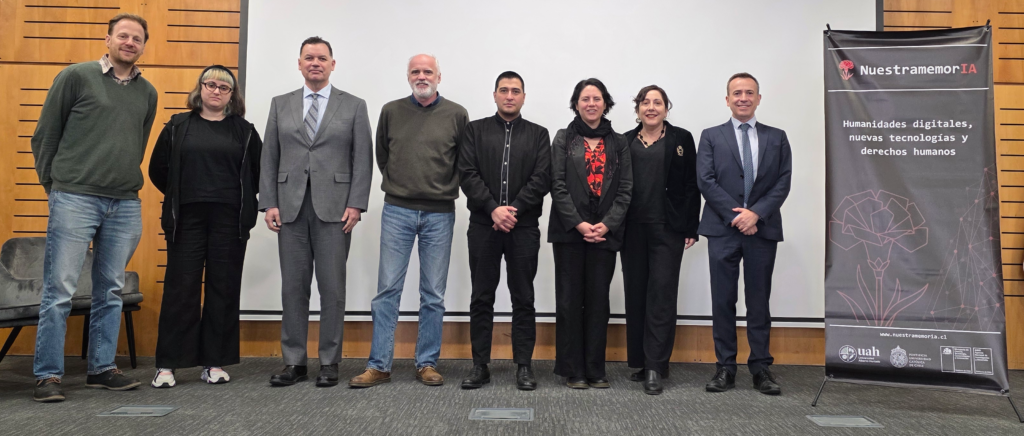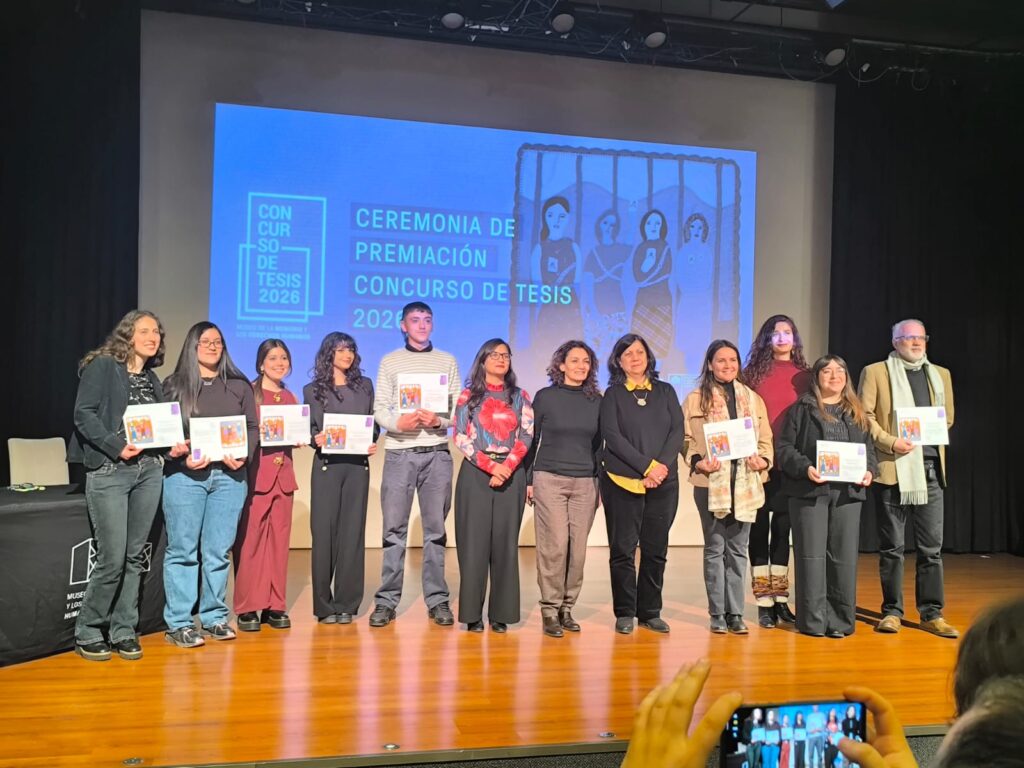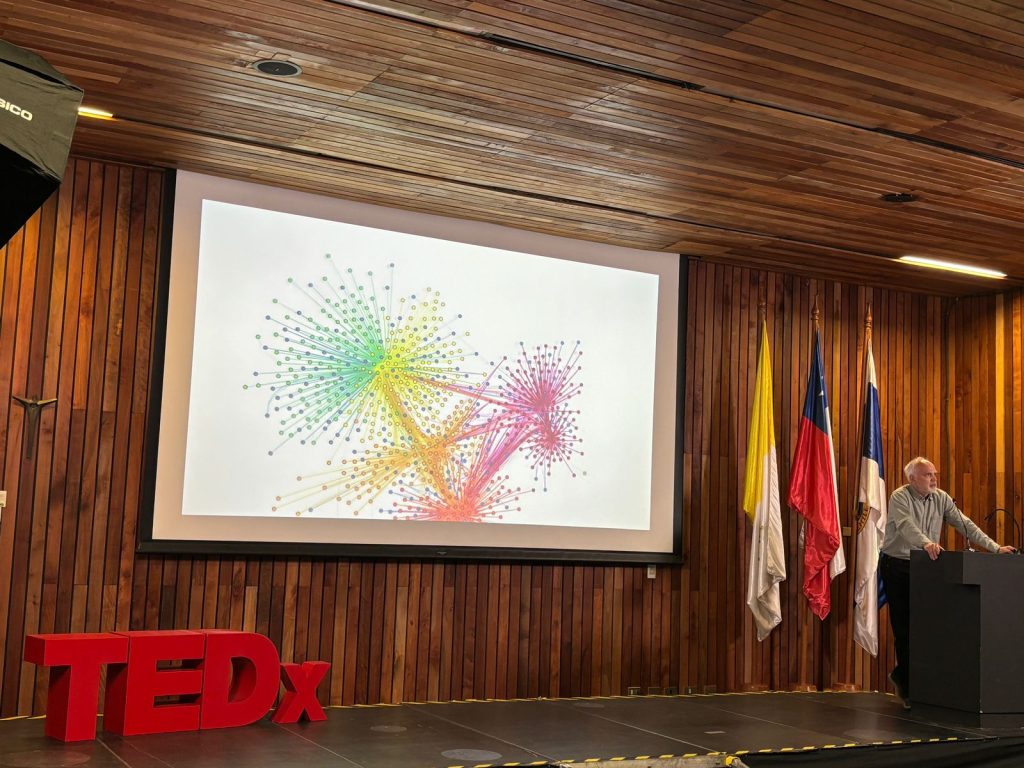
The presentation summarized the team's main achievements during this phase of the Nuestra MemorIA project.
"Our Memory" is a project that uses artificial intelligence to analyze and process historical records from the Chilean dictatorship, which may open up new avenues for research, education, and transitional justice, providing a more comprehensive understanding of this period.
The proposal involves the development of new computational methodologies specifically tailored to the analysis of historical documents and photographic archives from the period of the Chilean dictatorship. To this end, current processes used by experts in the humanities and social sciences are integrated into state-of-the-art AI systems under the umbrella of the Millennium Institute for Data Foundations (IMFD).
The project leaders are: Jocelyn Dunstan, Hugo Rojas, Camila Díaz, Juan Reutter, Antonia Fonck, and Domingo Mery.
Jocelyn Dunstan Escudero, a UC professor and IMFD researcher, leads clinical research on NLP in Chile, where her group has created internationally recognized corpora and annotated models; her interdisciplinary work with linguists and subject matter experts is crucial for supporting the use of LLMs and manual annotation to validate results.
“What Domingo presented today relates to the information available at nuestramemoria.cl… but always from a transdisciplinary perspective, which means taking into account the social sciences, history, and civil society organizations. This cannot be done by academia alone; there are people who have been working on memory and human rights for a very long time—in other words, they have been searching for their relatives for more than 50 years… We believe that this collaboration can help and lead to progress in this search.”
Jocelyn also explains the specific role of AI in this project: “The thing is, there’s a technique called optical character recognition (OCR), and it’s been getting better and better; so what we’re trying to do is use the latest generation of this software, while also ensuring the privacy of the documents. These documents are difficult to analyze, and this is where NLP (Natural Language Processing) comes into play; given their complexity, they pose a challenge.”
The transdisciplinary team is able to combine the most advanced computer techniques with the domain expertise of civil society actors to guide the navigation of enormous amounts of information and push the boundaries of AI in areas where human work has gaps. This project requires a team of computer scientists, historians, linguists, and social scientists, as well as close collaboration with government agencies and civil society organizations that oversee the archives. It is worth noting that Nuestra MemorIA currently has the support of the Museum of Memory and Human Rights, the National Institute of Human Rights (INDH), and the Vicaría de la Solidaridad.
Our MemorIA aims to contribute effectively to Chile’s transitional justice process through five fundamental pillars: a) the right of victims and their families to know the truth about the events; b) the prosecution and punishment of human rights violators; c) reparations for victims and their families; d) the preservation and transmission of memory; and e) ensuring that new human rights violations do not occur.
The talk is available at the following link: https://www.youtube.com/watch?v=C1qcwSY_nLs