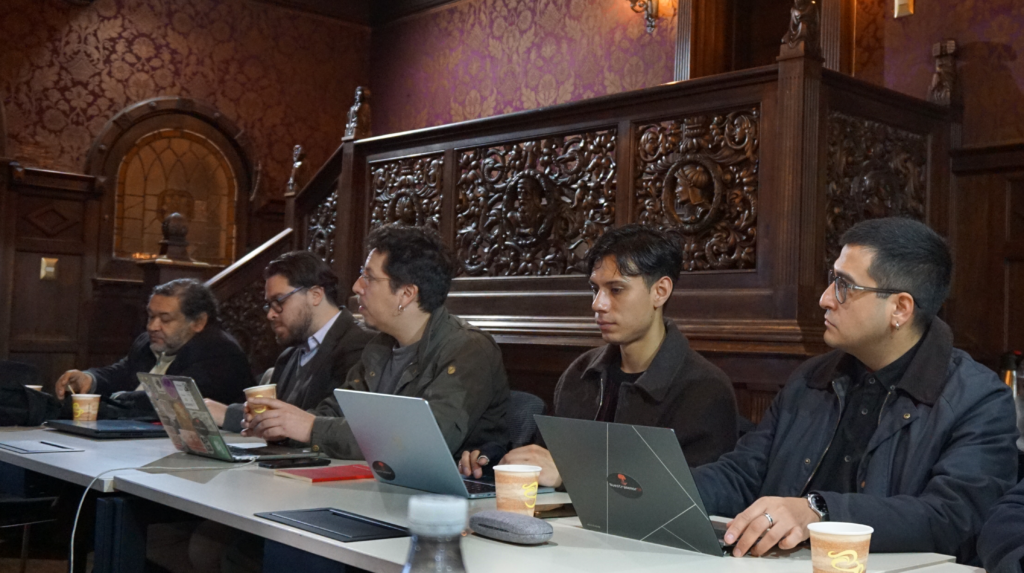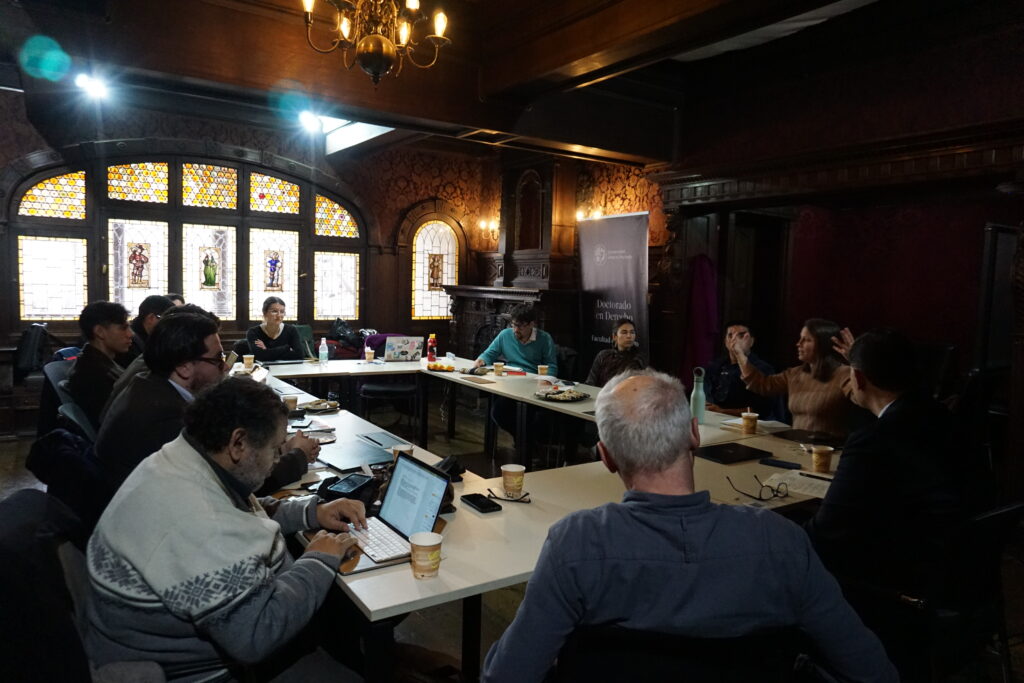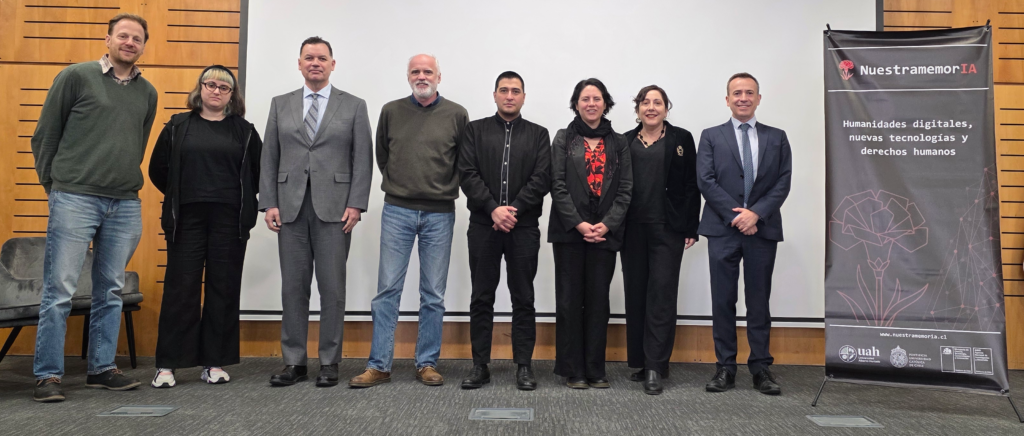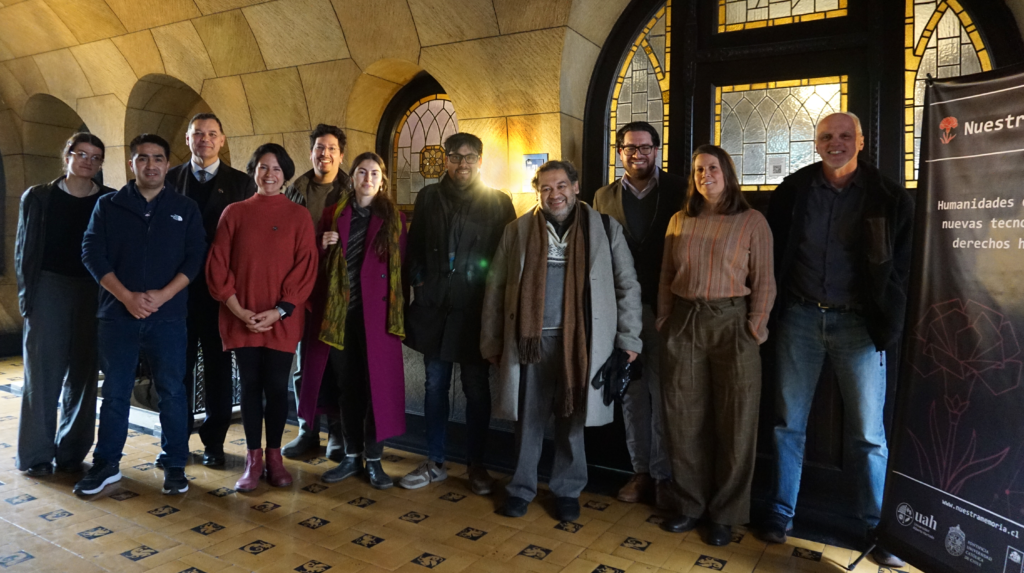
Archives are the foundation of all the developments we now know as artificial intelligence: How do we handle these archives from a computational perspective when neither their traces nor their records are part of what we know as official history? These are some of the key questions addressed at the Third “ NuestramemorIA ” Workshop, “Indigenous Archives and Artificial Intelligence, ” held at the Alberto Hurtado University School of Law.
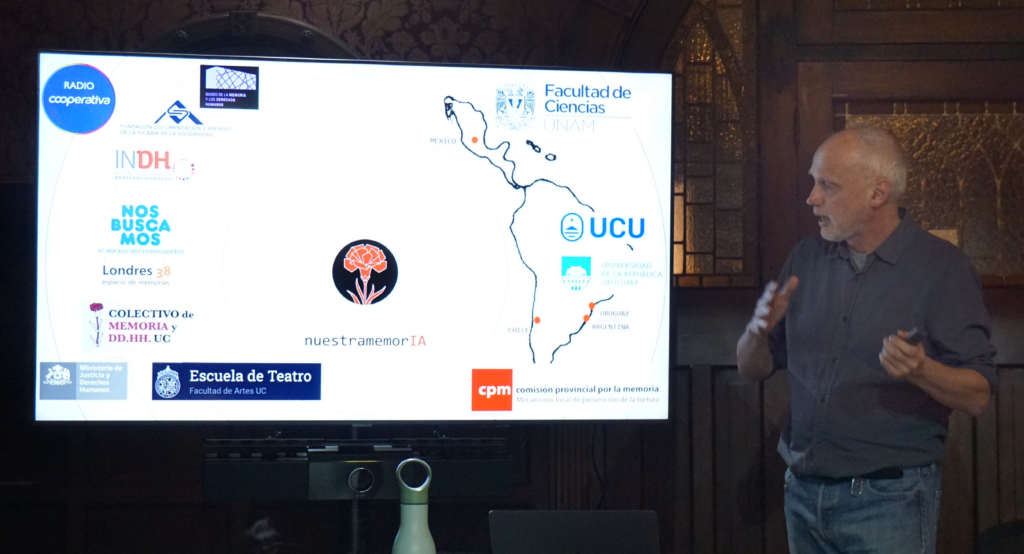
In the first part of the event, Domingo . Mery, a faculty member in the Department of Computer Science at the Pontifical Catholic University of Chile and a researcher at NuestramemorIA, highlighted the work that has been done on the project through collaborations with institutions such as Nos Buscamos, the Museum of Memory and Human Rights, and the Documentation and Archives Foundation of the Vicaría de la Solidaridad.
Among these collaborations, the most notable are those recently carried out with Radio Cooperativa and the archives of the School of Arts at the Pontifical Catholic University of Chile, which have provided audiovisual material from the era of the dictatorship. This material allows the team to train local language models using speech from that era, which will make it possible to catalog and search through audio and image archives. “Commercial artificial intelligence models perform very poorly in this type of task,” notes Domingo Mery. He adds that “all of these organizations have placed their trust in our ability to guarantee security and privacy in the use and handling of their archives, and to that end, we have made significant investments in servers that allow us to provide these guarantees, thanks to the funding we have available,” the scholar added.
Should we show what we shouldn't see?
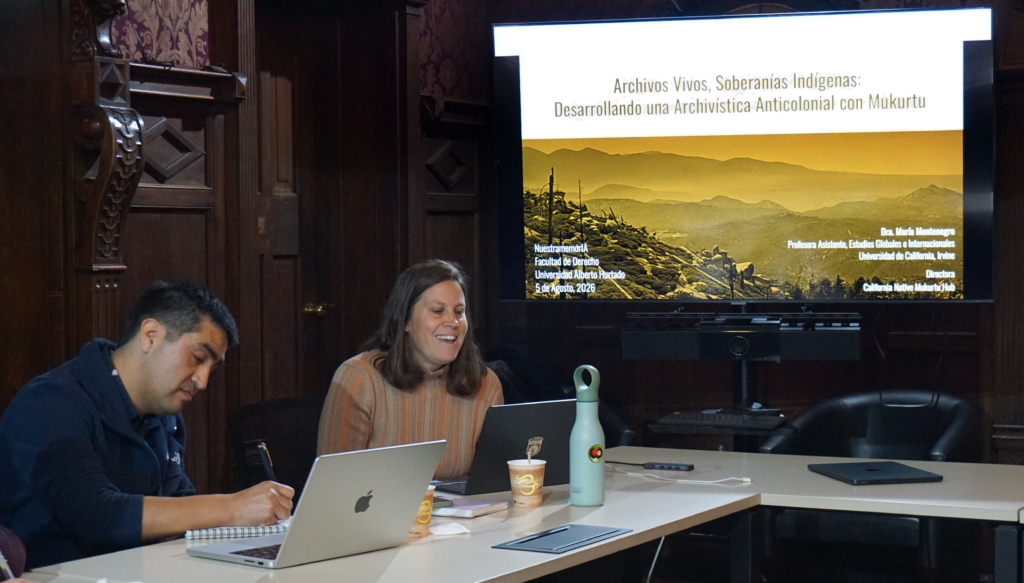
Mukurtu is a word that comes from the Australian Aboriginal language Warumungu, and it refers to a bag or pouch used to store sacred objects in accordance with strict rules: they may only be viewed with the permission of community leaders. This name was chosen for the open-source digital platform presented by María Montenegro, a scholar in Global and International Studies at the University of California, Irvine.
NuestramemorIA ’s international guest speaker discussed the challenges of developing a digital, anti-colonial archival system and cultural protocols that allow access to be tailored based on one’s identity and role within each culture. “This is a digital platform created with the epistemologies of Indigenous communities in mind, which empowers these communities to define when, how, and which contents from their archives can be viewed and accessed in digital format.”
The expert pointed out that part of the traditional work of archivists has involved handling objects and archives that were collected, cataloged, and recorded without the consent of the communities to which they belonged, as well as the incorrect attribution and misappropriation of indigenous knowledge—which, in many cases, was not created for general knowledge or dissemination.
The challenge facing Mukurtu is translating community norms and customs into digital environments, an issue that is becoming increasingly critical in the management of documents and archives for artificial intelligence development.
Private Archives as Spaces of Record-Keeping, Memory, and Resistance
Mapuche memory is sustained in part by documents linked to historical processes, according to a presentation by Pablo Millalén, a postdoctoral researcher at the University of California, Los Angeles. Millalén recounted his family’s firsthand experience caring for private archives at Lof Mañiuko, in the municipality of Galvarino. “My chuchu (grandmother) would show me images, documents, identification cards of those who had passed away, sales contracts, 90-year leases, and land grants—all documents linked to historical processes that shape the community’s memory through the nütram, the deep conversation and shared experience that is built across generations.”
From this perspective, archives are not merely repositories of information, but living spaces where interpretations of the past are contested and individual and collective memories are articulated. Tukulpanzungu is the Mapudungun term used to describe the act of bringing events and stories from the past into the present—events that remain preserved primarily in the memories of families. This idea exists, with some variations, in various indigenous cultures, and technology is incorporated in this context as a form of mediation that expands the possibilities for preserving, organizing, connecting, and communicating these records. At the same time, new developments raise new questions about how historical knowledge is constructed, linking the past to collective experiences and producing new social and political relationships in the present.
Cross-Curricular Learning and Interdisciplinary Challenges
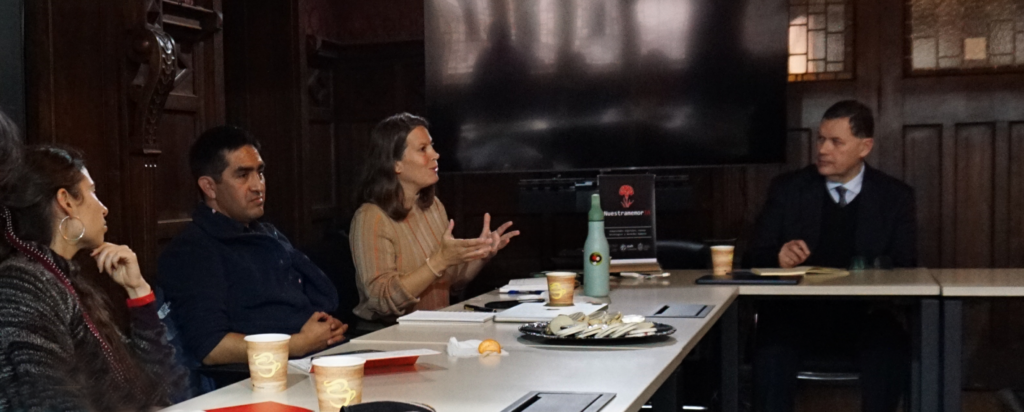
The panel discussion, moderated by Hugo Rojas—a professor at Alberto Hurtado University and the Catholic University of Uruguay, as well as a researcher at NuestramemorIA and VioDemos—raised a series of challenges related to archival science and the management of indigenous communities’ documents in light of the artificial intelligence developments being pursued by NuestamemorIA.“The challenge is not only technological, but also epistemological, ethical, and related to governance: to develop an AI that preserves context, respects collective rights, and contributes to heritage management based on collaboration and trust, rather than the mere extraction of information,” noted Rojas, who also teaches in the University of California’s Study Abroad Program in Chile.
For NuestramemorIA, collaborating with experts in the field of indigenous archives confirms the challenge these archives pose for the development of AI: these types of records contain contextualized, collective, and culturally situated knowledge that cannot be treated as conventional data. This requires interdisciplinary models that integrate data sovereignty, consent, cultural protocols, and effective community participation—objectives that our project is consciously working toward.